Written by Sara Bulgheroni
Founder and guide at Stockholm Private Guide
Written
At a Glance
Wooden boats in Sweden carry centuries of survival, craftsmanship, design, and maritime identity, from Viking clinker-built vessels to Stockholm's living boat-club culture.
A Maritime Tradition That Still Floats
If you spend even a few days in Sweden, particularly around the glittering archipelagos of the coast, you will quickly notice a deep, almost spiritual connection between the Swedes and the sea. But beyond the sleek modern fiberglass yachts, there is a much more romantic, and labor-intensive, maritime love affair at play: the Swedish wooden boat.
If you know nothing about wooden boats, you might just see a pretty vintage vessel bobbing in the harbor. However, these boats represent thousands of years of survival, craftsmanship, and a stubborn dedication to tradition. Let's dive into the fascinating history of wooden boats in Sweden and discover how this vibrant culture is still thriving today.
From Viking Longships to Royal Blunders
The Swedish relationship with wooden boats is practically written into the nation's DNA. The geography of Sweden, with its thousands of islands and deep archipelagos, meant that historically, if you wanted to get anywhere, you needed a boat.
The Viking Age (c. 793-1066): The tradition truly began with the iconic Nordic clinker-built boats. This technique - where the edges of the wooden hull planks overlap each other - created ships that were incredibly strong, flexible, and light. In fact, the Nordic clinker boat tradition is so historically significant that it was recently added to UNESCO's list of Intangible Cultural Heritage.
The Vasa Ship (1628): No discussion of Swedish maritime history is complete without a little candor about its most famous failure. In 1628, the Vasa, a magnificent, heavily ornamented wooden warship, sank in Stockholm harbor less than a mile into her maiden voyage because she was dangerously top-heavy. Today, the salvaged Vasa is the world's only preserved 17th-century ship and a breathtaking testament to historic wooden shipbuilding, even if the engineering was a bit off.
The Birth of Naval Architecture (18th Century): Sweden later redeemed itself through figures like Fredrik Henrik af Chapman, a naval architect who transformed boatbuilding from a guessing game into a precise science in the late 1700s.
The Golden Age of Leisure and C.G. Pettersson
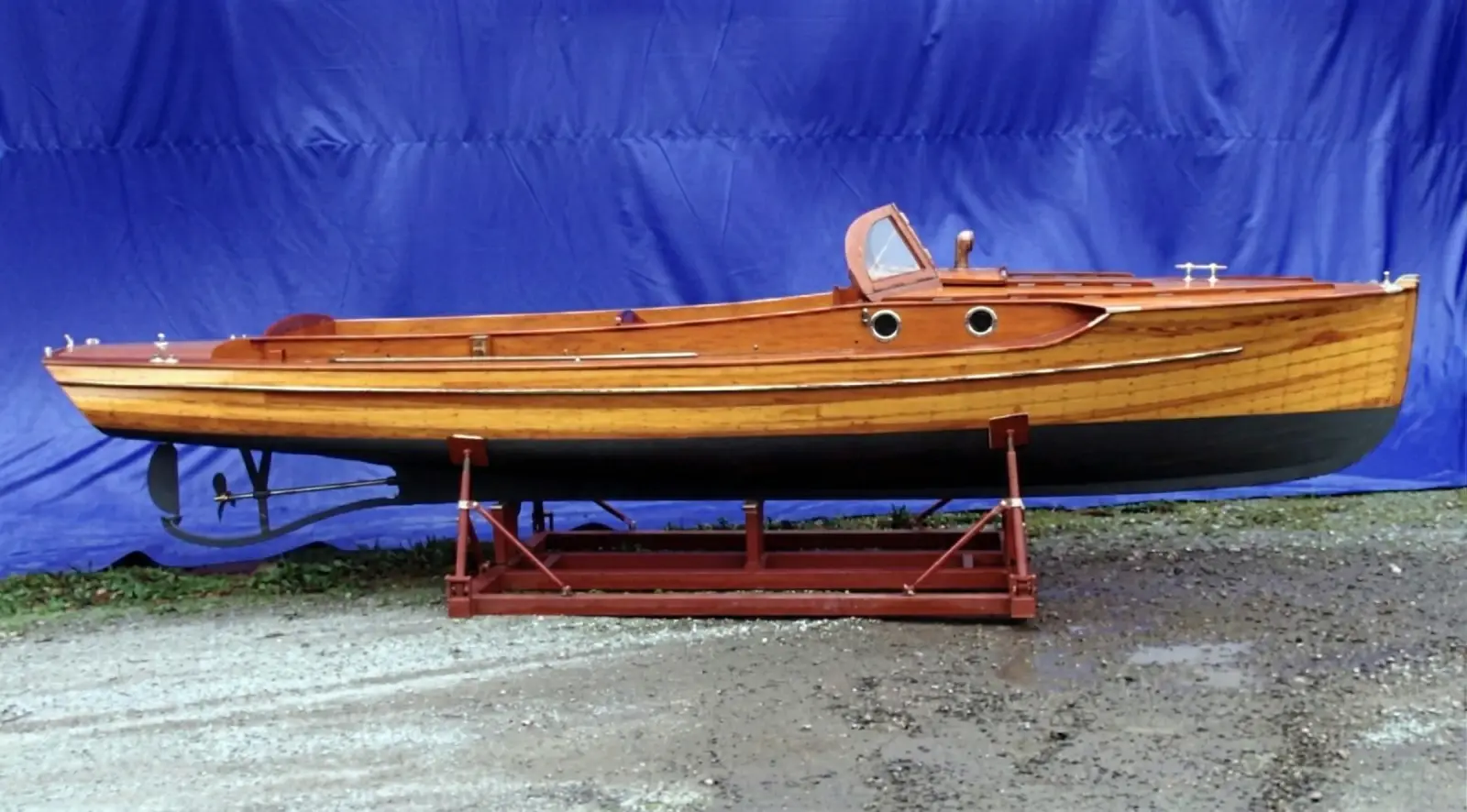
Fast forward to the early 20th century. Engines were replacing sails, and boating was shifting from a necessary means of transport to a beloved summer leisure activity. Carl Gustaf (C.G.) Pettersson (1876-1953) was arguably the most famous motorboat designer in Scandinavian history.
Pettersson designed over 1,000 boats in his lifetime, and his creations define the classic Swedish summer aesthetic. A true "Petterssonbat" is instantly recognizable:
Long and narrow: Designed to cut efficiently through the water with low engine power.
Plumb bow: A straight, vertical front.
Gleaming Mahogany and Oak: Finished with endless coats of marine varnish.
"A wooden boat is not just a vessel; it is a living, breathing piece of art that demands your time, your patience, and an absurd amount of sandpaper."
Stockholm's Boat Clubs and the Reality of Getting a Berth
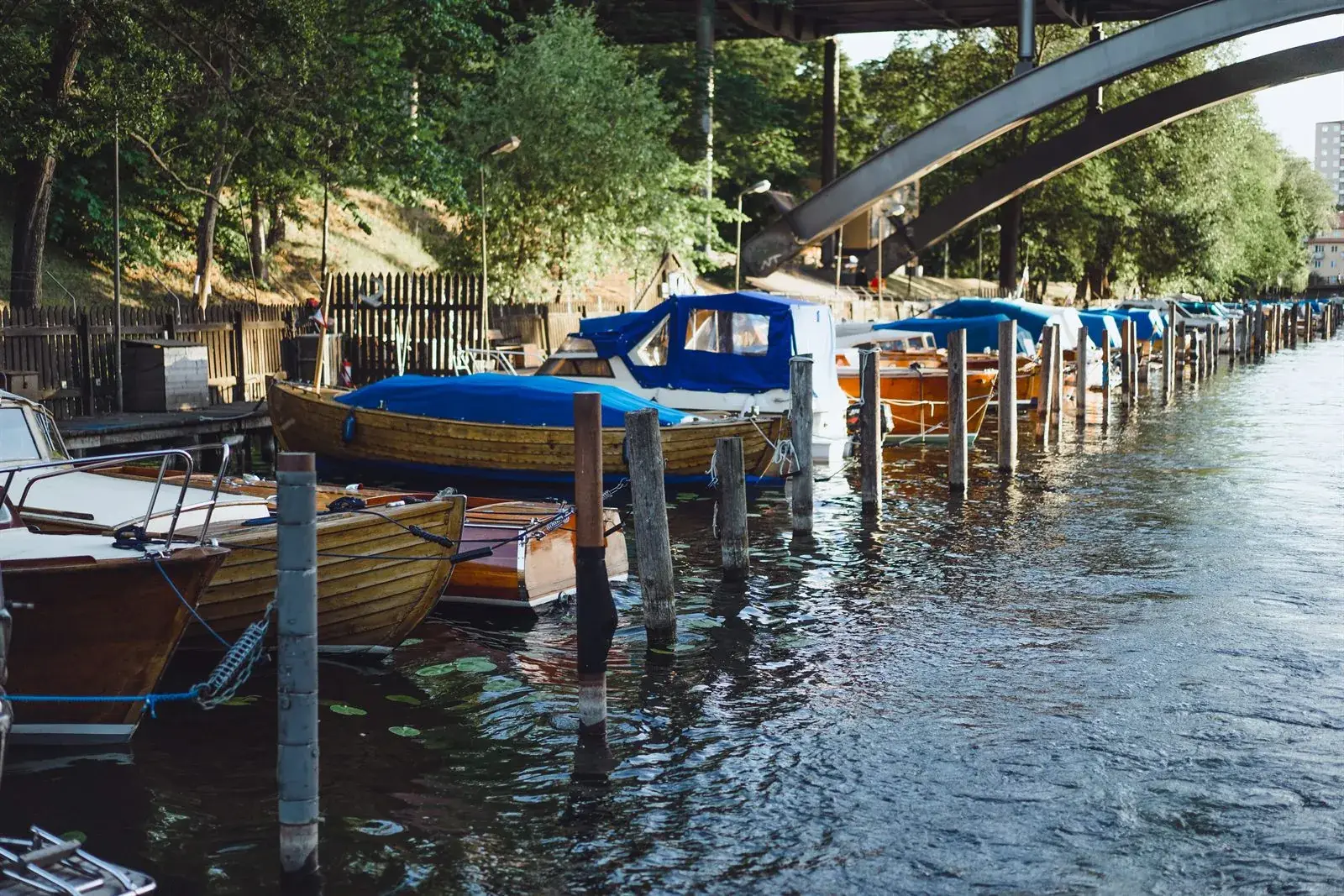
One of the clearest places to see Sweden's wooden-boat tradition still alive is in Stockholm's boat clubs. These are not just places to leave a boat for the summer. In many cases, they are working communities where members share responsibility for maintenance, seasonal launching and hauling, and the practical life of the harbor. The Swedish Boating Union's own model statutes and harbor material explicitly refer to arbetsplikt (working duty), including work connected to the harbor, winter storage, and watch duty.
A good example is Heleneborgs Båtklubb at Pålsundet in central Stockholm. The club presents itself not simply as a mooring site, but as a place where wooden boats are maintained, repaired, and kept in use. That makes it a strong example of living maritime heritage, not just a scenic backdrop.
Getting a berth in Stockholm can take patience, but the timeline depends on where you apply and what kind of boat you have. Stockholm's own leisure-boating strategy says that waiting times for the city's public berths can, in some areas, be up to ten years. Heleneborg's current membership information is more specific to that club, stating that its queue for a berth is currently from one year and up, depending on boat type and size. That is a more accurate way to describe the situation than claiming a single standard wait across the city.
What matters most is that a berth in a Stockholm boat club often comes with obligations as well as access. Members are commonly expected to contribute time and work, and that shared effort is one reason older boats, older skills, and older traditions are still visible in the city today.
Experiencing Stockholm's Wooden Boats for Yourself
You don't need to commit to a waiting list or endless sanding to experience this tradition. If you are researching Stockholm city tours, make sure to look for options that actually put you out on the water in a historic vessel.
There are a few great ways to immerse yourself in this maritime culture:
Sightseeing Cruises: Several operators offer scenic trips through the archipelago aboard classic wooden boats. When you take your tour through the Djurgarden canal on one of these vessels, the rhythmic, gentle chug of the old engine provides an atmosphere that a modern ferry simply cannot match.
Expert Guidance: A knowledgeable Stockholm tour guide can completely change how you view the harbor. While walking along the docks of Strandvagen or Skeppsholmen, they can point out the subtle differences between a 1920s Pettersson and a modern replica.
Tailored Experiences: There is a big difference between standard guides and tours and an experience tailored to your specific interests. If you are a history buff or a maritime enthusiast, consider booking a private tour of the city's historic boatyards and clubs. Working with a specialized Stockholm tour guide ensures you get behind-the-scenes access to the boatyards. With so many guides and tours available, choosing one focused on maritime history will give you the most authentic look at the city's floating heritage.
Whether you are admiring a massive 17th-century warship or waving at a tiny mahogany cruiser zipping through the archipelago, the wooden boats of Sweden offer a beautiful glimpse into the soul of a nation shaped by the sea.
Sources
Official and primary references used to verify dates, schedules, opening information, and other details that can change: