Written by Sara Bulgheroni
Founder and guide at Stockholm Private Guide
Written
At a Glance
Fotografiska combines ever-changing photography exhibitions, historic architecture, late opening hours, excellent dining, and some of Stockholm's most captivating views into a single cultural stop.
A Waterfront Cultural Stop
For visitors drawn to photography, design, architecture, and Stockholm’s waterfront atmosphere, Fotografiska is one of the city’s strongest cultural stops. Set in a former customs building on Södermalm’s northern edge, it combines major photography exhibitions, late opening hours, food, drinks, events, and some of the best views across the water toward the island of Djurgården (the royal park and former hunting ground).
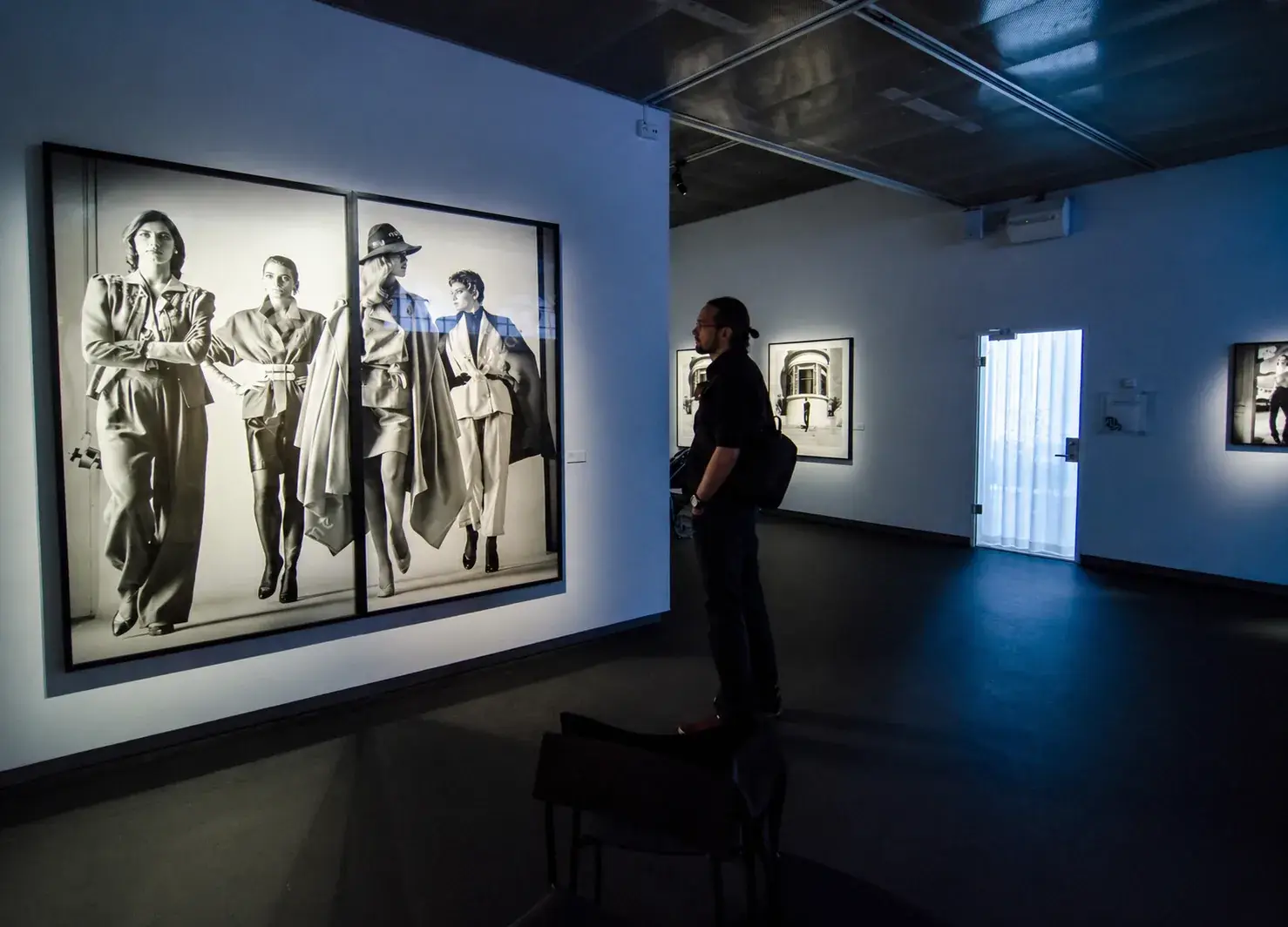
Fotografiska is not a traditional museum experience built around one fixed route or a single historic collection. Its strength is its dynamic nature. The exhibitions change throughout the year, often mixing internationally known names with contemporary voices, documentary work, fashion, portraiture, and more experimental visual storytelling.

From Customs House to Cultural Landmark
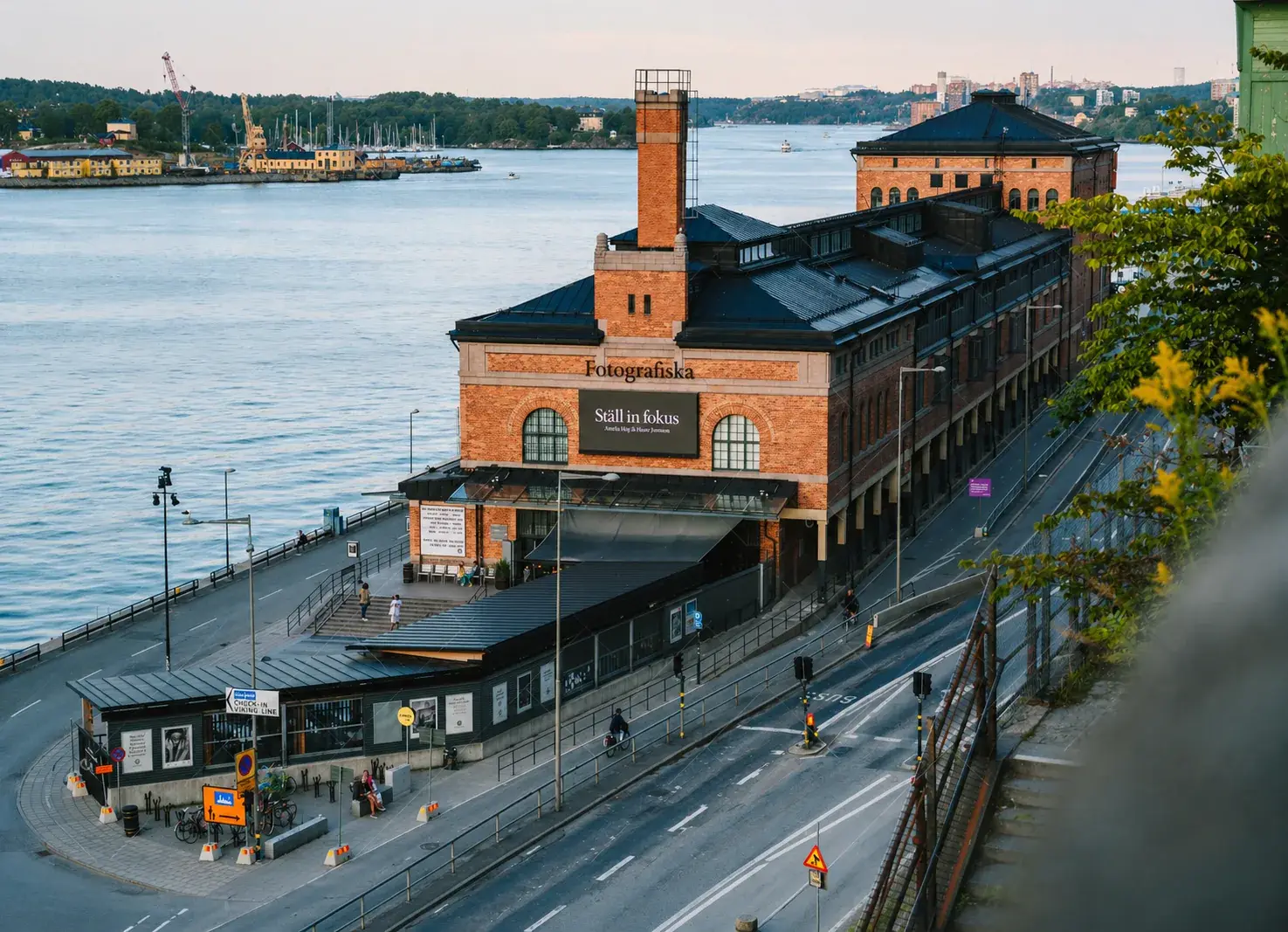
Fotografiska is housed in Stora Tullhuset (Great Customs House), the old customs house at Stadsgårdshamnen on the island of Södermalm. The building was designed by Ferdinand Boberg and completed in 1910, with later additions. For much of the 20th century, it served Stockholm’s customs operations and harbor trade before being adapted for Fotografiska in 2010.
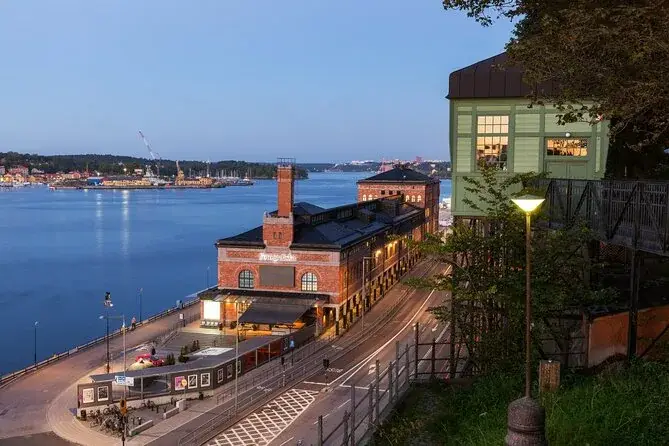
That setting is a major part of the experience. The red brick, arched windows, industrial scale, and waterfront location give Fotografiska a very different feeling from Stockholm’s more formal museum interiors. It feels urban, open, and a little dramatic, especially in the evening when the building glows beside the water.
Fotografiska was founded by the brothers Jan and Per Broman and opened in 2010 with major exhibitions that included Annie Leibovitz’s A Photographer’s Life 1990 to 2005. From the beginning, the ambition was clear: to make photography feel immediate, accessible, and culturally central, not tucked away as a specialist interest.
What to Expect Inside
The galleries are designed to pull your attention toward the images. Lighting is controlled, the rooms are often dark, and the photographs carry the atmosphere. Depending on the current program, a visit might take you from large-scale landscape photography to intimate portraiture, social documentary projects, fashion imagery, or conceptual work.
The pace is also flexible. You can move through the exhibitions in under an hour, or you can slow down and make an evening of it. That is one reason Fotografiska works well for different kinds of visitors: serious photography fans, casual museum-goers, couples looking for something atmospheric, or travelers who want culture without the stiffness of a traditional museum visit.
Top Floor, Panoramic Views, and Dining
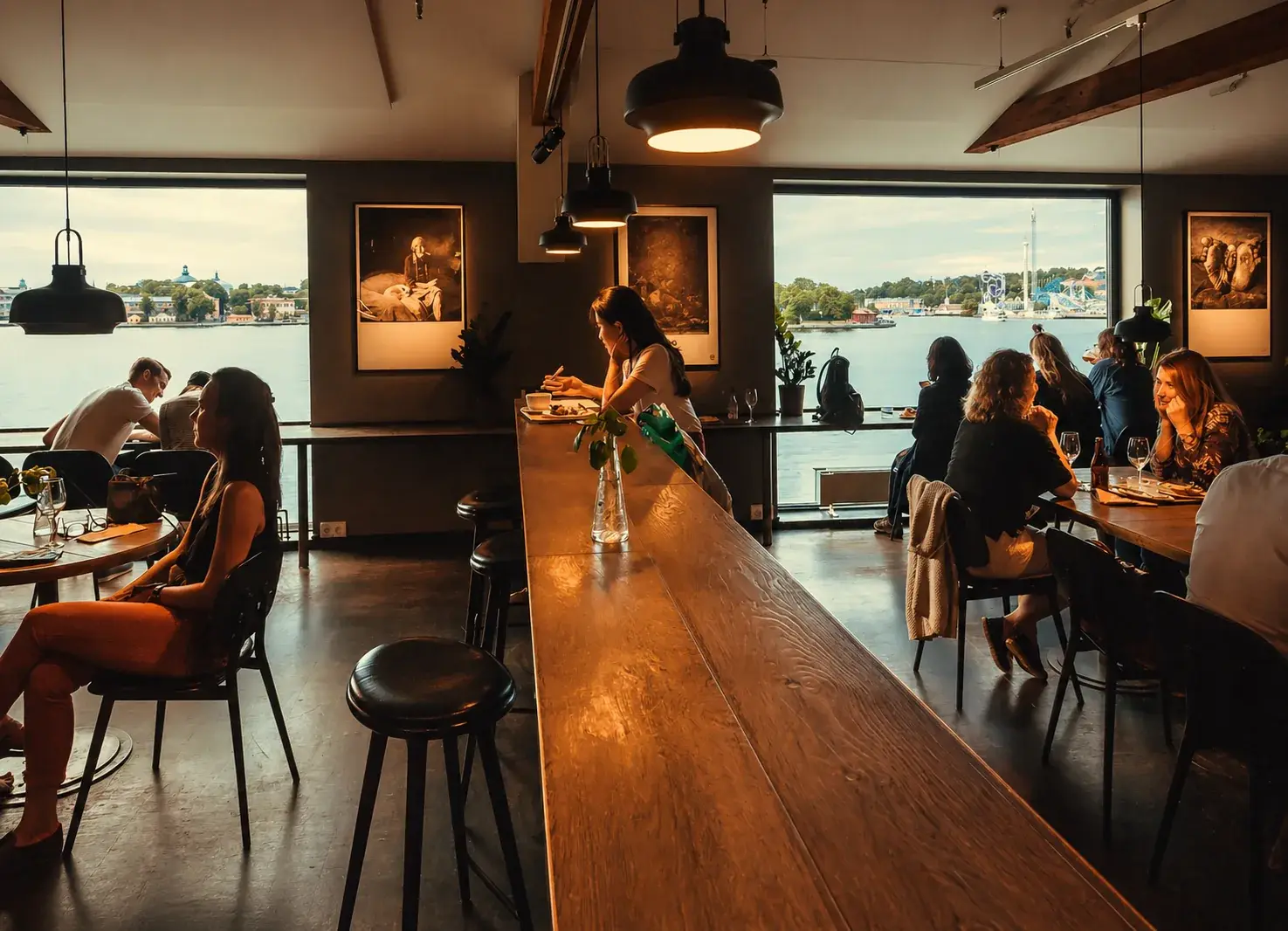
One of Fotografiska’s biggest draws is its culinary offerings. The restaurant and bistro sit high in the building, with sweeping panoramic views over Stockholm’s water, ferries, quays, and islands. The current restaurant concept presents food almost like another exhibition, with a seasonal menu that changes around new themes and stories.
The bistro is more relaxed and works well for lunch, a “fika” (the typical Swedish coffee break), or drinks after seeing the exhibitions. Because the setting is so good, it is worth allowing time to sit down rather than treating Fotografiska as a quick in-and-out stop. The view alone makes the visit feel more connected to the city.
The Late-Night Atmosphere
Fotografiska stands out because it stays open late. The museum is normally open daily from 10:00 AM to 11:00 PM, with Midsummer’s Eve listed as the one day of the year it is closed. That late schedule changes the mood completely. A daytime visit feels calm and cultural, while an evening visit can feel more social, with drinks, music, events, and people gathering before or after dinner.
This is where Fotografiska really separates itself from many museums. It is not only a place to look at photography, but also a place to meet, eat, listen, talk, and spend part of a typical Stockholm evening.
Why It Belongs on Your Stockholm Itinerary
Fotografiska works because it combines several Stockholm experiences in one place: historic architecture, contemporary culture, waterfront views, good food, and a relaxed social atmosphere. It is easy to reach, easy to enjoy, and flexible enough to fit into a short city break or a longer cultural itinerary.
For first-time visitors, it is especially useful because it shows a modern side of Stockholm without losing the city’s historic heritage. You are still in an old harbor building, still looking out over the water, but the experience inside is current, polished, and vibrant.
Whether you come for the exhibitions, the architecture, the restaurant, or the late-night atmosphere, Fotografiska is one of the clearest examples of how Stockholm blends culture with everyday city life.
Integrating Fotografiska into Your Itinerary
As you walk the Södermalm waterfront, the building's striking brick facade is hard to miss.
Expert tour operators know that timing a visit is key, often suggesting an evening visit to take advantage of the late hours and the changing light over the water. If you prefer a more customized day, Fotografiska pairs well with a private walk through Stockholm's creative district. Your local guide can point out the surrounding architectural details of the neighborhood beforehand and place the museum in a wider city context.
That is one reason local guides often recommend finishing the outing with thought-provoking exhibitions and then either an unforgettable dinner or a drink at the top-floor bar.
“Fotografiska works because it combines several Stockholm experiences in one place: historic architecture, contemporary culture, waterfront views, good food, and a relaxed social atmosphere.”
Sources
Official and primary references used to verify dates, schedules, opening information, and other details that can change: