Written by Sara Bulgheroni
Founder and guide at Stockholm Private Guide
Written
At a Glance
The Dalahäst grew from a humble winter carving tradition in Dalarna into one of Sweden's most enduring symbols of folk art, craft, and national identity.
A Swedish Symbol You Will Spot Everywhere
If you are planning a trip to Sweden, you will soon notice a bright, colorful little wooden horse peering out from souvenir shop windows, hotel lobbies, and local homes. This is the Dalahäst (Dalecarlian horse), and it is arguably the most recognizable symbol of Swedish culture.
Whether you plan to take your tour through the cobblestone streets of the capital or venture out into the serene countryside, understanding the story behind this charming figurine will add a rich layer of meaning to your visit.
A Humble Beginning in the Deep Woods
The story of the Dalecarlian horse begins in the deeply forested region of Dalarna, central Sweden, hundreds of years ago. During the long, dark, and freezing winter months, when farm work slowed and evenings grew dark, craftsmen and farmers would often carve these little horses from pieces of wood at the kitchen table in their timber cabins. These figures were a simple way to pass the time, and many were made as toys for children.
The horse was a natural choice of subject. In those days, horses were invaluable companions, vital for pulling heavy timber loads, farming, and transportation. They were a symbol of strength, loyalty, and survival in a harsh climate.
For a child, receiving a carved wooden horse from their father was a treasured gift.
Falu Red and Kurbits Flourishes
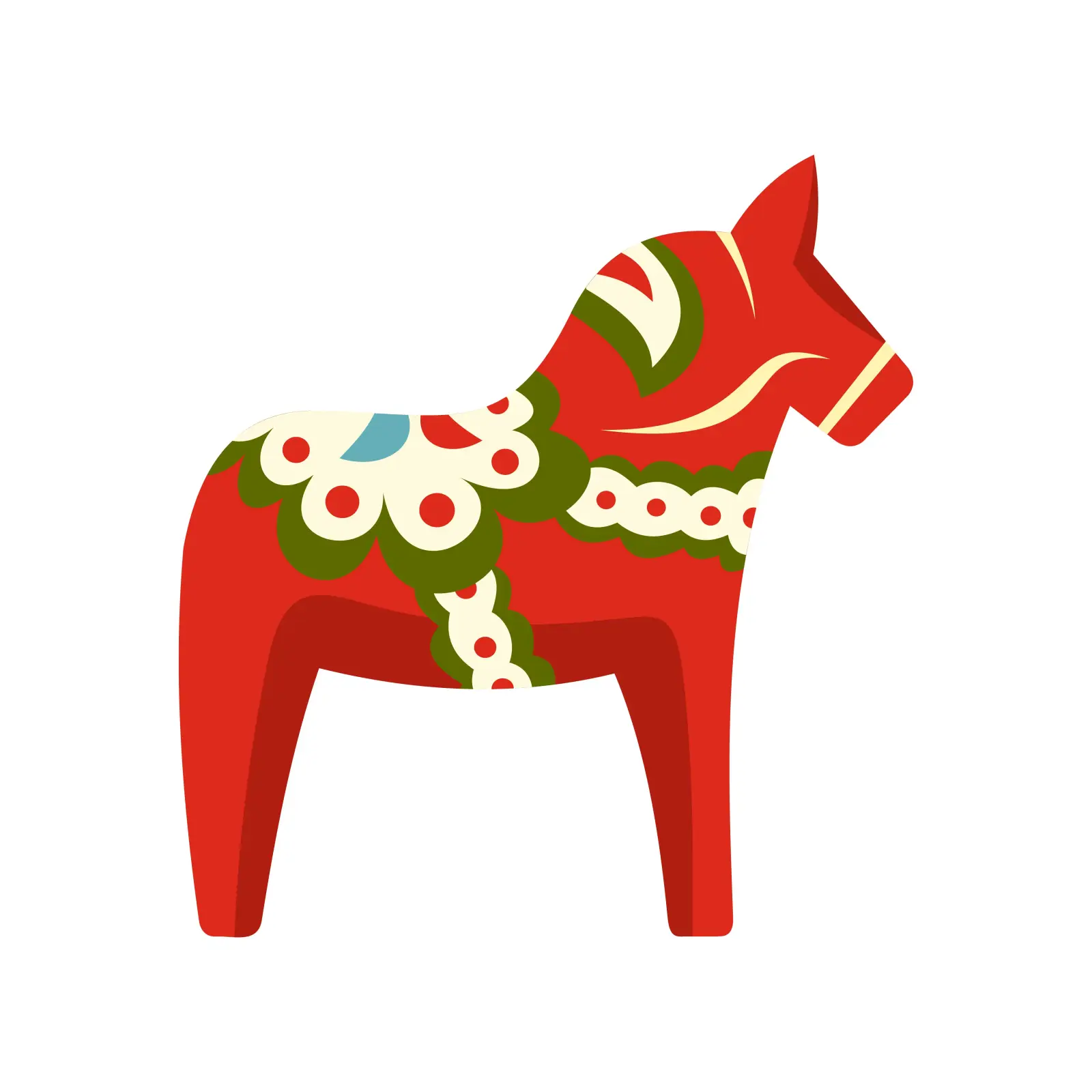
Originally, these wooden horses were unpainted and rustic. It was not until the 18th century that they received their vibrant makeovers. The traditional Dalecarlian horse is painted a bright, striking red. This color comes from the copper mines in Falun (a city in Dalarna), and it is closely associated with Falu rödfärg (Falu red), which blankets the iconic wooden cottages scattered across the Swedish landscape.
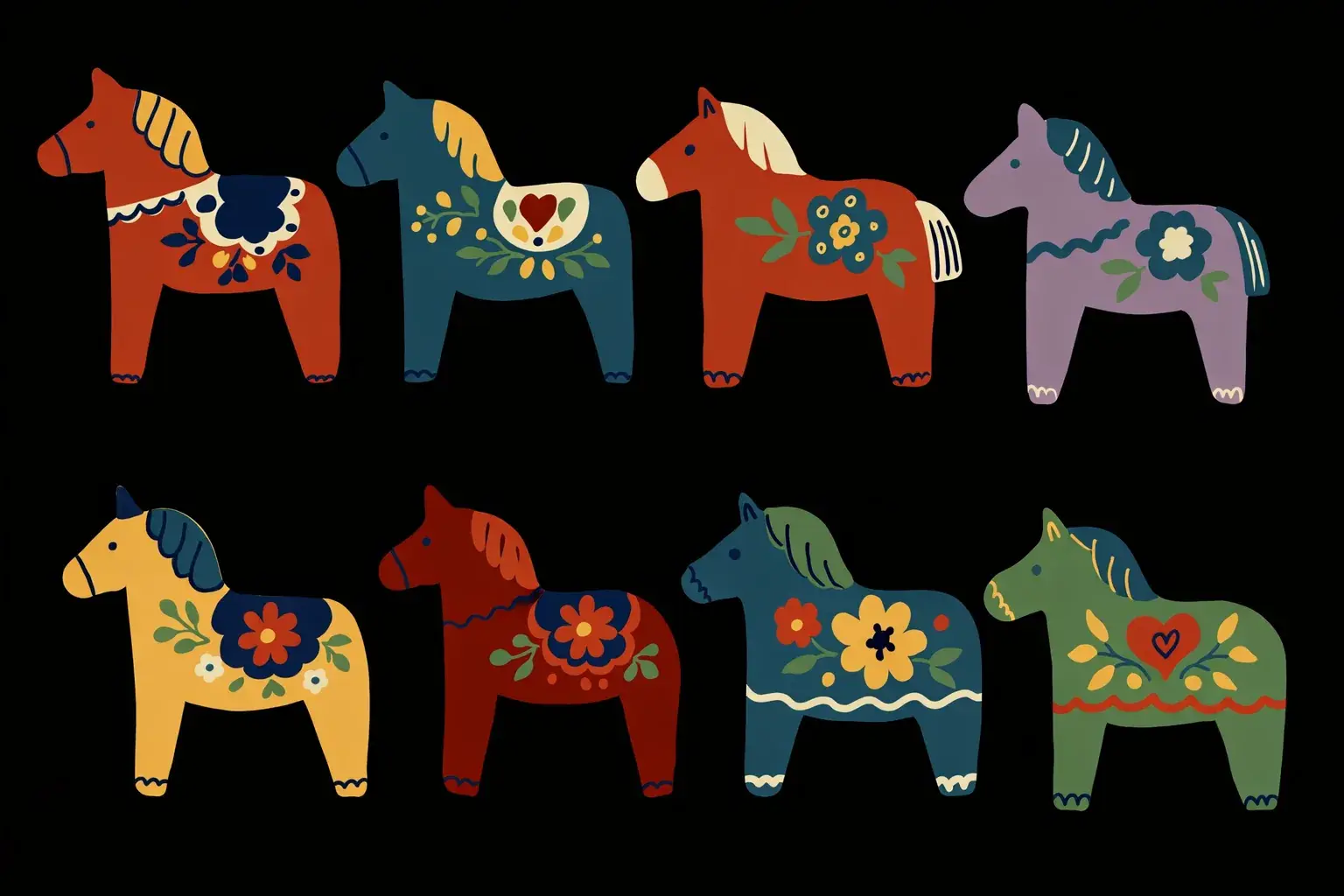
The intricate, floral patterns adorning the saddle and harness are known as Kurbits painting. This traditional folk art style requires immense skill.
To this day, authentic Dalecarlian horses are still hand-carved with knives and hand-painted by artisans in Dalarna. Because of this meticulous process, no two Dalecarlian horses are ever exactly alike.
The 1939 World's Fair: A Star Is Born
For centuries, the Dalahäst was just a local handicraft. So, how did it become a global icon?
The turning point happened at the 1939 World’s Fair in New York. The Swedish pavilion decided to feature a massive, nearly three-meter-tall Dalecarlian horse outside its entrance. It was an absolute hit. Visitors and international press were completely charmed by the brightly colored, folksy statue, and the pavilion quickly sold out of the thousands of miniature wooden horses they had brought along to sell.
Overnight, the humble Dalecarlian horse transformed from a regional children's toy into one of Sweden's most recognizable symbols.
A Monumental Tribute in Avesta
If you think a three-meter-tall horse is impressive, Sweden has since outdone itself. Today, the world's largest Dalecarlian horse stands proudly in Avesta, marking the gateway to the Dalarna region. Unveiled in 1989, this colossal concrete monument towers at an astonishing 13 meters, stretches 13 meters long, and weighs nearly 67 tons. Situated where highways 70 and 68 meet, it serves as a gigantic, unmissable welcome sign for road-trippers and stands as the ultimate testament to the country's love for this iconic figure.
Finding Your Own Piece of Swedish History
While the true home of the Dalahäst is the Dalarna region, you certainly do not have to leave the capital to appreciate them. If you are looking into Stockholm city tours, you will find that many local experts love to point out the best spots to find authentic, hand-crafted horses. A knowledgeable Stockholm tour guide can point you away from the mass-produced factory copies and steer you toward genuine artisan shops in Gamla stan, the Old Town, or Södermalm.
In fact, when you book a private tour of the city's design districts or cultural hubs, ask your guide about Swedish folk art. The professionals leading guides and tours here are deeply passionate about local history. A great local guide will tell you that the Dalecarlian horse is not just a souvenir; it is a piece of the Swedish soul.
Exploring the city with top-tier guides and tours ensures you get the real stories behind the beautiful artifacts you see in the shop windows. So, when you finally arrive and start exploring, keep an eye out for these vibrant little horses. Taking one home is taking home a piece of Swedish history, carved with care and painted with pride.
“The Dalecarlian horse is not just a souvenir; it is a piece of the Swedish soul.”