Written by Sara Bulgheroni
Founder and guide at Stockholm Private Guide
Written
At a Glance
Fettisdagen turns Sweden's late-winter pastry obsession into a cultural event, with semlor, bakery queues, royal folklore, and strong local opinions across Stockholm.
A Winter Tradition Worth Knowing
Welcome to one of the coziest, most deliciously fiercely defended traditions in Sweden! If you are planning a trip to Sweden in the winter, or if you simply love exploring quirky cultural phenomena, you absolutely need to know about Fettisdagen.
Whether you plan to take your tour through the snow-dusted streets of Gamla stan (the Old Town) or explore the modern cafes of Södermalm, understanding this sugar-rush holiday will give you a true taste of Swedish culture.
Here is everything you need to know about Sweden's favorite pastry, its deadly history, and why celebrating Fettisdagen should be at the top of your travel itinerary.
What Is Fettisdagen?
Fettisdagen literally translates to "Fat Tuesday." It is the Swedish equivalent of Mardi Gras or Shrove Tuesday. Historically, it was the last day to feast on rich, fatty foods before the Christian fasting period of Lent began.
Today, Sweden is a highly secular country, so religious fasting is mostly a thing of the past, and the nation turns its attention to cozying up in pastry shops and bakeries. Ask any Stockholm tour guide, and they will tell you that the true celebration happens there, centered entirely around one glorious pastry: the Semla.

The Anatomy of a Semla
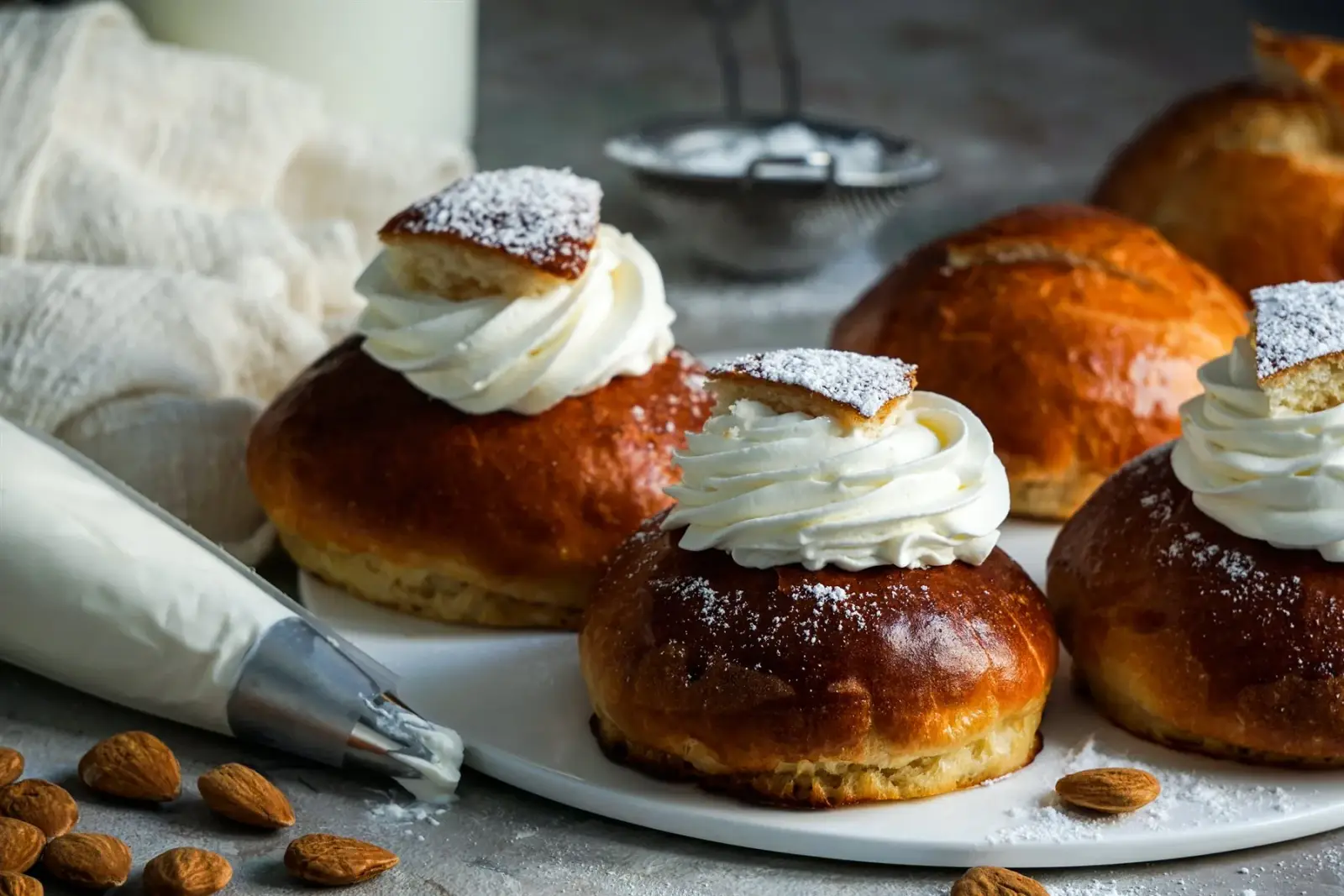
If you are wandering the city during your Stockholm city tours between January and March, you will see bakery windows lined with hundreds of these beautiful little buns. A traditional semla (plural: semlor) is a masterpiece of textures and flavors.
The Bun: A soft, fluffy wheat bread heavily spiced with fragrant cardamom.
The Filling: The center of the bun is scooped out and mixed with a sweet, textured almond paste (mandelmassa).
The Crown: A literal mountain of freshly whipped cream.
The Lid: A tiny "hat" cut from the top of the bun, placed gently on the cream and dusted with powdered sugar.
A Deadly (And Delicious) History
The semla hasn't always looked like the beautiful cream-filled cloud it is today. If you take a tour of the Royal Palace or Drottningholm Palace, where the royal family still lives, you might hear the slightly morbid, legendary history behind it.
Originally, the bun was a plain bread roll eaten by the wealthy. By the 18th century, it evolved into a dish called hetvägg, where a baked bun filled with almond paste was placed in a deep bowl of warm milk.
The King Who Ate Himself to Death: On Fat Tuesday in 1771, King Adolf Frederick of Sweden sat down for a massive feast. He consumed lobster, caviar, sauerkraut, kippers, and champagne. To top it all off, he decided to have his favorite dessert: hetvägg. He did not just have one; he ate 14 servings. Shortly after, he suffered severe digestive issues and passed away, forever remembered as "the king who ate himself to death."

The Modern Semla Madness: Looking Back At 2026
While Fettisdagen 2026 officially fell on February 17, the "semla season" now stretches from just after Christmas all the way to Easter. A country of over 10.5 million people eats roughly 50 million of these heavy cream buns every year!
Swedes are usually known for their love of tradition, but when it comes to the semla, the rules have gone out the window. Every year brings new, viral "franken-semla" inventions. Local businesses offering guides and tours often highlight these wild variations, which have included over the years:
The Semmelwrap: The bun dough is rolled flat and wrapped around the filling like a burrito.
The Nacho-Semla: Crispy cardamom bread meant to be dipped into a bowl of almond paste and cream.
The Semla Croissant: A flaky, buttery French twist on the Swedish classic.
If you are visiting in the winter months, the local experts leading your excursions will likely have strong opinions on where to find the absolute best classic bun or the most outrageous modern hybrid. Because it is such a massive part of local life, many companies specializing in sightseeing and cultural walks incorporate pastry stops into their winter itineraries, allowing you to debate your favorites alongside the locals over a cup of strong Swedish coffee.
“If you want one winter tradition that explains Swedish comfort, ritual, and pastry loyalty all at once, start with Fettisdagen and the semla.”